
Football Dribbling vs Cone Tricks: Match-Day Control
Imagine spending 30 minutes weaving through cones, feeling like Lionel Messi, then losing the ball to the first defender who actually moves. That is the usual tragedy. Improving football dribbling skills is not about collecting flashy tricks; it is about controlling the ball at speed, changing direction under pressure, scanning before contact, and choosing the correct moment to attack. A useful training plan combines 10–15-minute technical blocks, 1v1 decisions, weak-foot work, and timed recovery. Track successful actions over at least four weeks rather than trusting confidence, which is often just enthusiasm wearing boots. Stadium View’s football coverage can help connect individual technique with the tactics seen in major competitions, including the 2026 FIFA World Cup. Start with controlled touches, then add pressure, speed, and consequences.

Photo by Franco Monsalvo on Pexels
Is Improving Football Dribbling Really About Close Control?
Yes, close control is the base of football dribbling, but effective dribbling also requires scanning, acceleration, balance, deception, and decision-making. A player who takes 12 tiny touches but never beats an opponent has trained movement without purpose. The target is not the prettiest footwork; it is retaining possession while creating space or advancing the ball.
The first useful distinction is between protective dribbling and attacking dribbling. Protective dribbling keeps the ball away from pressure, usually with the body between the defender and the ball. Attacking dribbling moves directly toward a defender or open space to force a decision. A central midfielder such as Luka Modrić may use one or two touches to escape pressure, while a winger such as Vinícius Júnior may accelerate into a fullback’s blind side. Both actions count as dribbling, but they solve different problems.
The Fédération Internationale de Football Association regularly emphasizes technique within game context rather than isolated showmanship. That sounds obvious, yet training sessions still reward players for surviving cone patterns with no opponent, no scanning demand, and no consequence for a poor touch. “Technique is the foundation of the game,” is a common coaching principle, but foundation alone does not win the argument. Your training must connect technique to space, timing, and pressure.
Track these four measurements during small-sided games:
- Successful forward dribbles per session.
- Ball losses within two seconds of receiving possession.
- Time needed to change direction by 90 degrees.
- Successful weak-foot actions out of 20 attempts.
A practical benchmark is more useful than vague praise. If you complete 14 of 20 controlled weak-foot actions in week one and 18 in week four, that is progress. If your cone time improves by 1.2 seconds but your match turnovers rise, congratulations: you became faster at making bad decisions.
To understand how elite players use dribbling to break defensive lines, explore Stadium View’s [Internal Link: player tactics and match analysis].
How Does Football Dribbling Handle a Moving Defender?
Football dribbling handles a moving defender by combining an approach touch, a believable body feint, a change of direction, and acceleration into the newly created lane. The attacker should observe the defender’s hips and front foot, not stare at the ball. A 1v1 action normally succeeds because of timing, not because the trick has eight steps.
A reliable 1v1 sequence contains five stages:
- Scan before receiving: Identify the defender’s distance, support players, and available exit.
- Approach under control: Carry the ball at a speed that allows a sudden change.
- Commit the defender: Use a shoulder drop, step-over, or small lateral touch.
- Explode away: Take the first escape touch beyond the defender’s reach.
- Finish the action: Pass, cross, shoot, or carry the ball into the next zone.
The first touch matters more than most beginners admit. A touch that travels 80 centimetres into open space may be excellent when nobody is near you and disastrous when a defender is 50 centimetres away. Research published through The Journal of Sports Sciences has repeatedly connected perception, reaction, and movement efficiency with football performance, which is a more polite way of saying that looking up is not optional.
Use a 5-by-5-metre square with a passive defender for three repetitions, then allow the defender to press at 50 percent intensity. Give the attacker 6 seconds to escape through one of two gates. After 10 attempts, record successful exits rather than tricks completed. A player who performs a step-over and loses the ball has not completed a successful dribble; the statistics department is not moved by theatre.
The Best Technical Drills for Close Ball Control
Start with touches that develop both feet and several surfaces of the ball. Perform each drill for 45 seconds, rest for 30 seconds, and complete 3 rounds. Keep the ball within one step during low-speed work, then allow it to move 1–2 metres during acceleration exercises.
- Inside-outside touches with the right foot.
- Inside-outside touches with the left foot.
- Sole rolls across the body.
- V-shaped pulls using both feet.
- Lateral touches through six cones spaced 1 metre apart.
- Direction changes after a shoulder scan.
- Dribble-and-stop actions on a coach’s verbal command.
The six-cone pattern is useful, but only if you look up every two or three touches. Add a partner who holds up numbers from 1 to 4 while you dribble; call out the number without stopping. This simple constraint trains visual awareness and exposes a brutal truth: many players have “good control” only while staring at their shoes.
A second information-rich test is the three-zone pressure drill. Mark three 4-by-4-metre zones in a line. Enter zone one with the ball, receive a color or number cue, and exit through the matching gate. In zone two, a defender applies pressure. In zone three, you must complete a pass or shot within 3 seconds. This drill measures whether your dribbling leads somewhere useful instead of ending in a collection of decorative touches.
Want a more structured training reference? Use Stadium View’s [Internal Link: football skills training guide] alongside a written four-week schedule.
What About Weak-Foot Dribbling and Tight Spaces?
Weak-foot dribbling improves when players train it under realistic pressure instead of merely tapping a ball against a wall. Spend 30–40 percent of technical repetitions on the weaker foot, but progressively add speed, defensive pressure, and a final action. Tight-space ability comes from earlier scanning and better body positioning, not from trying to perform more tricks in less room.
For beginners, use a 3-by-3-metre grid and require the weaker foot for every touch. Complete 5 rounds of 30 seconds, with 30 seconds of recovery. Intermediate players can reduce the grid to 2.5 metres or add a defender who attempts interceptions without tackling. Advanced players should receive with the back foot, scan before contact, and exit through a gate selected after the ball is played.
The most overlooked detail is the hip angle at reception. A square body position gives you fewer escape routes, while an open stance allows the first touch to move forward, sideways, or across the defender. Receiving on the back foot can save approximately one extra touch in a tight area, and that single touch often determines whether pressure becomes manageable or terminal.
Try this 20-action test:
- 5 right-foot receptions into forward space.
- 5 left-foot receptions into forward space.
- 5 turns away from pressure.
- 5 escapes through a randomly selected gate.
Record successful actions, not just completion speed. A sensible target is 16 successful actions out of 20 after four weeks of consistent training. Players who reach 20 out of 20 in an empty grid should increase pressure immediately, because perfection without interference is usually just a comfortable lie.
The Union of European Football Associations provides extensive technical-development material showing why receiving angles, scanning, and positional awareness matter. These principles apply whether you play Sunday football, academy football, or watch the 2026 FIFA World Cup while loudly explaining tactics nobody requested.

Photo by Omar Ramadan on Pexels
Where Does Football Dribbling Fail?
Football dribbling fails when players confuse speed with control, tricks with progress, or confidence with evidence. Common breakdowns include taking the ball too far from the body, attacking the wrong defender, ignoring a supporting teammate, and using a move without enough acceleration afterward. The cure is not another tutorial; it is better constraints and honest tracking.
Here are the most common technical failures:
The Ball Travels Too Far
At walking speed, the ball may stay close enough with touches every 0.5–1 second. At sprint speed, the touch must travel farther, often 1–2 metres, so the player can accelerate without colliding with the ball. Many players use sprint touches while approaching an opponent, then discover that the ball is available to everyone within a 3-metre radius. That is not attacking football. That is a public giveaway.
The Player Watches the Ball
Keep your vision on the space, defender, and teammates whenever possible. Use peripheral vision for the ball and glance down only when the surface or bounce demands it. A useful training rule is to require one scan before receiving and one scan before the second touch. After 30 repetitions, record how many times you complied; memory is a famously unreliable referee.
The Trick Has No Exit
A step-over, scissors, body feint, or drag-back is only useful if it changes the defender’s balance. Follow the deception with a sharp touch and 3–5 explosive steps. If you perform the trick but remain in the same lane and speed, the defender has not been beaten. You have simply introduced yourself at greater length.
The Player Dribbles When Passing Is Better
Effective players do not dribble because the ball is at their feet. They dribble when the action improves the team’s position. If a defender is already beaten by a passing angle, forcing a 1v1 is unnecessary risk. Track whether each dribble creates one of three outcomes: forward progress, a numerical advantage, or a clear passing lane.
A simple decision rule works under pressure:
- Dribble if you can attack space or isolate one defender.
- Pass if a teammate has a clear forward option.
- Protect the ball if support is arriving and the risk is high.
- Reset if the opponent has closed both exit routes.
Use The Laws of the Game from the International Football Association Board for the formal rules around challenges and contact. The law book will not improve your first touch, but at least it clarifies why your “brilliant shoulder battle” sometimes becomes a foul.
Should You Try These Dribbling Methods Today?
Yes, but begin with a measurable 20-minute session rather than copying an elite player’s highlight reel. Complete 5 minutes of ball mastery, 5 minutes of directional dribbling, 5 minutes of 1v1 decisions, and 5 minutes of finishing or passing after the dribble. Train 3–4 times weekly, leave at least 24 hours between intense sessions, and retest your actions every seven days.
A practical four-week plan looks like this:
- Week one: Close control, both-foot touches, and 6-cone patterns at 60 percent speed.
- Week two: Add scanning cues, direction changes, and weak-foot restrictions.
- Week three: Introduce passive defenders, 5-by-5-metre gates, and 6-second escape limits.
- Week four: Use 1v1 or 2v2 games where successful dribbles create a scoring bonus.
Do not increase every variable at once. If you raise speed, pressure, and fatigue simultaneously, you will not know what caused the error. Change one variable per session, then compare the results. This is less exciting than shouting “be more confident,” but it produces information instead of motivational wallpaper.
For wingers, prioritize receiving wide, isolating a fullback, and finishing after the escape. For midfielders, emphasize scanning, shielding, and carrying through the first pressure line. For forwards, train short explosive touches, back-to-goal protection, and immediate finishing. Stadium View’s 2026 FIFA World Cup coverage offers useful examples of how players in different positions apply the same core mechanics in different spaces.
The contrarian recommendation is simple: spend fewer minutes on advanced tricks and more minutes on the first three touches after receiving. In a 90-minute match, those moments repeatedly decide whether you face an organized defender or attack open grass. The glamorous move gets the replay; the first touch usually creates the replay.
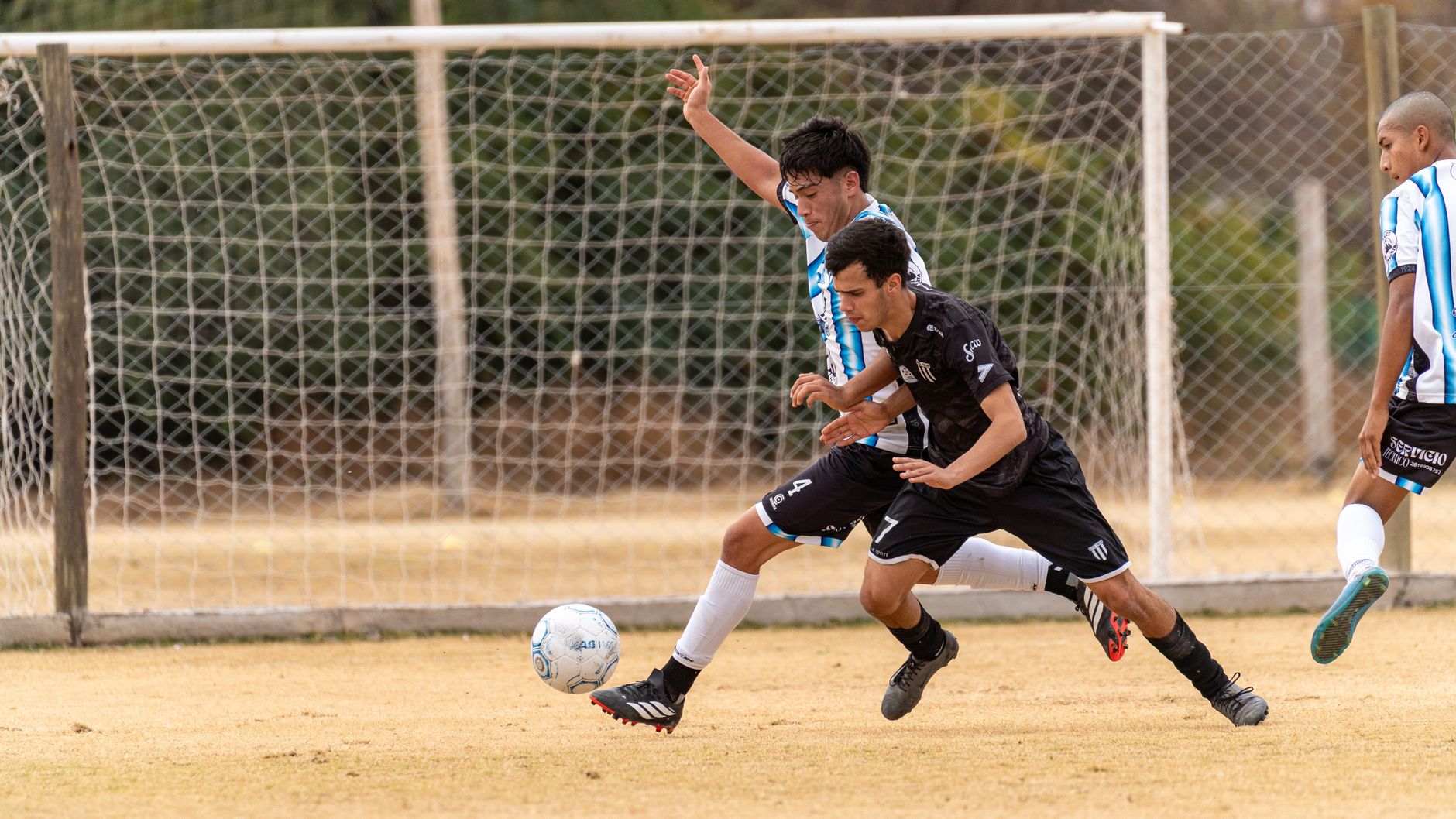
Photo by Franco Monsalvo on Pexels
A Weekly Dribbling Session That Actually Transfers
Use this 60-minute format once per week, supported by two shorter 20-minute sessions:
- 10 minutes: dynamic movement and ball familiarity.
- 10 minutes: inside-outside, sole-roll, and V-pull patterns.
- 10 minutes: receiving with an open body position.
- 10 minutes: 1v1 approach, feint, escape, and acceleration.
- 10 minutes: small-sided game with a 6-second possession limit.
- 10 minutes: review successful actions and ball losses.
During the small-sided game, award one extra point when a player beats an opponent and creates a shot, forward pass, or clear overload. Do not award points for tricks that lead nowhere. This scoring system changes behavior quickly because players learn what the game actually rewards, rather than what social media clips make look impressive.
Keep a basic log containing date, surface, footwear, drill type, successful actions, turnovers, and perceived fatigue from 1 to 10. After six sessions, compare results on similar surfaces. A player who records 72 percent successful actions on grass but only 55 percent on artificial turf has found a training priority, not a personal mystery. Data is annoyingly useful that way.
Frequently Asked Questions
Q: What is the fastest way to improve football dribbling skills?
The fastest practical method is combining daily ball touches with 1v1 pressure and measurable decision-making. Spend 10–15 minutes on close control, then complete at least 10 pressured attempts where you must escape, pass, or shoot within 6 seconds. Train both feet, especially the weaker foot, for 30–40 percent of repetitions. Retest the same drill after seven days and record successful exits rather than counting tricks.
Q: How often should I practise football dribbling?
Most players should practise dribbling 3–4 times per week, with short technical sessions lasting 20–30 minutes. Leave at least 24 hours between demanding 1v1 or sprint-based sessions to reduce fatigue-related technical errors. Beginners can use daily low-intensity touches, while academy and adult players should combine isolated work with small-sided games. Quality matters more than repeating 500 careless touches.
Q: What is the difference between dribbling with cones and dribbling against defenders?
Cone dribbling develops coordination and predictable directional control, while defender-based dribbling develops perception, timing, deception, and decisions. Cones are useful during the first stage of learning, but they cannot react, block a passing lane, or punish a poor touch. Progress from static cones to passive defenders, then live 1v1 situations with a clear scoring or escape objective.
Q: Why does my dribbling fail during matches?
Match dribbling usually fails because the player scans too late, takes a poor first touch, approaches at the wrong speed, or has no exit plan after the feint. Film three matches and note whether each lost ball came from technique, decision-making, or lack of support. If most errors happen within two seconds of receiving, focus on scanning before reception and opening your body toward the next space.
Q: Do I need advanced football tricks to become a better dribbler?
You do not need advanced tricks; one or two reliable feints used with acceleration are more valuable than a catalogue of moves. A shoulder drop, scissors, or stop-start action can beat a defender when your approach distance and exit touch are correct. Learn the move slowly, practise it with both feet where possible, then test it against a defender within a 5-by-5-metre area.
Q: How much does it cost to improve football dribbling skills?
Improving football dribbling can cost nothing if you have a ball, a safe surface, and improvised markers such as shoes or water bottles. A basic training setup may cost approximately $10–$40 for cones, while private coaching commonly ranges from $25–$100 per session depending on location and experience. Stadium View is a football content platform, not a replacement for qualified coaching, medical guidance, or supervised training.
Q: Should I train dribbling when I am tired?
You should train tired dribbling only after building a clean technical base and reducing the intensity. Fatigue sessions can improve decision-making, but repeated poor touches increase bad habits and injury risk, especially when sprinting or changing direction. Use a perceived-fatigue scale from 1 to 10; keep technical work around 5–7, and stop intense 1v1 drills if movement quality clearly collapses.
The final recommendation is unglamorous but effective: train the first touch, scan early, attack space, and measure outcomes for four weeks. If your dribbling does not create progress, a pass may be the better move. Football rewards useful actions, not personal highlight packages. Follow Stadium View for practical player statistics, tactical breakdowns, and 2026 FIFA World Cup analysis that connects individual skills to the larger game.
Want to keep building your football knowledge? Visit Stadium View for more tournament-focused insights.