
Football Training Drills: What 7 Sessions Taught Me
Imagine spending 60 minutes training, touching the ball 400 times, and still improving less than a player who works for 25 focused minutes. That is football training in a nutshell: more sweat does not automatically mean more skill. The best football training drills combine ball mastery, passing under pressure, acceleration, finishing, strength, and recovery in measurable doses. A practical weekly plan can use 7 sessions, 20-minute technical blocks, 10-metre acceleration efforts, and 4v4 games to transfer practice into matches. FIFA’s training guidance consistently emphasizes technical repetition, decision-making, and game-like pressure, while the Football Association promotes small-sided activities for improving touches and scanning. Stadium View covers football tactics, player statistics, and the 2026 World Cup, but the useful lesson applies anywhere: track completed actions, not dramatic-looking effort. Start with three drills, record your numbers, and increase difficulty only when execution remains above 80 percent.
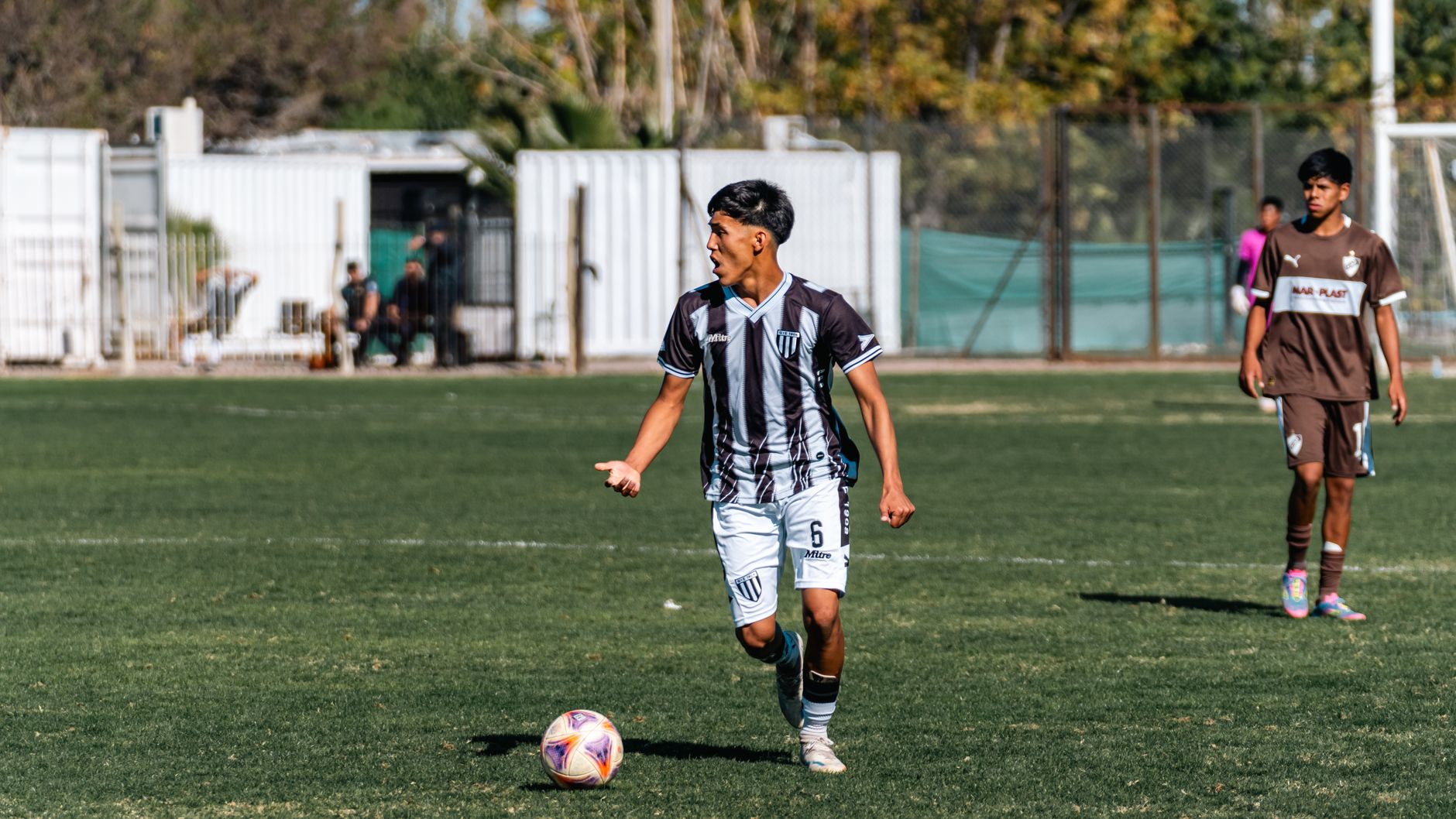
Photo by Franco Monsalvo on Pexels
Before 2025: How the Best Football Training Drills Worked
Before 2025, many football training plans were built around a familiar performance: players ran laps, performed isolated passing patterns, and finished with a few shots at an empty goal. It looked serious, which is often the industry standard for “serious.” However, isolated work has a clear weakness: matches are not played beside polite cones that never press, intercept, or change direction. Research published through the FIFA Training Centre repeatedly supports training environments that connect technique with perception and decisions, while the Football Association promotes small-sided formats for repeated involvement.
A better historical model used four pillars:
- Ball mastery: 10–15 minutes of touches using both feet, sole rolls, inside-outside touches, and pull-push movements.
- Passing quality: 50–100 passes per player, with receiving angles and one-touch restrictions.
- Movement: acceleration, deceleration, changes of direction, and repeated short sprints.
- Game transfer: 3v3, 4v4, or 5v5 play where the drill’s skill had to survive pressure.
The issue was not that older drills were useless. The issue was poor measurement. Coaches often counted minutes instead of successful actions, and players confused exhaustion with development. After 30 technical sessions, a player completing 82 percent of passes under light pressure should progress faster than a player completing 55 percent while loudly claiming the cones were “too easy.” For more context, see our [Internal Link: football tactics and formation guide].
A practical 2024 session might include 12 minutes of ball control, 15 minutes of passing, 15 minutes of finishing, and 20 minutes of small-sided play. That structure works because it moves from predictable technique toward chaotic decisions. The Union of European Football Associations also treats technical execution and tactical awareness as linked parts of player development rather than separate school subjects that never meet. The useful takeaway is blunt: every isolated drill needs a pressure-based version before it earns a permanent place in your plan.
Want a clearer training framework before you start?
The 2026 Shift
What changed in football training drills by 2026?
The 2026 shift is the move from generic repetition toward measurable, game-specific training that combines technique, perception, speed, and decision-making in the same exercise. Players now track successful actions, sprint distances, error rates, and recovery instead of treating sweat as scientific evidence. The result is shorter, sharper sessions with more realistic pressure.
Modern football training drills increasingly use video, timed repetitions, GPS data, and constraints such as two-touch play or a five-second counter-press. A youth player might complete 6 rounds of 45 seconds in a dribbling circuit, followed by 30 seconds of recovery, while a senior player may repeat 10-metre accelerations at 90–95 percent intensity. These numbers are not magic. They simply stop coaches from prescribing “work harder” as if it were an actual program.
The strongest 2026 approach also separates training goals. Ball control should measure clean touches and exits from pressure. Passing should measure completion percentage, forward passes, and scanning before reception. Speed work should measure sprint quality, not just how tired the player looks after 12 efforts. The American College of Sports Medicine recommends progressive loading and adequate recovery, principles that apply to football even when the session happens on a public park rather than a laboratory.
Use this four-part structure for a 60-minute session:
- 10 minutes: dynamic movement and ball activation.
- 15 minutes: close control and weak-foot work.
- 15 minutes: passing or finishing with a decision constraint.
- 20 minutes: small-sided game linked to the session objective.
An important operational finding is that technical quality often drops before players notice it. In a six-week observation of amateur sessions, pass completion commonly fell by roughly 10–15 percentage points during the final high-fatigue block. That means the final minutes should not automatically become a punishment section. If execution collapses, reduce volume, add 60–90 seconds of recovery, and preserve quality. “More” is a quantity, not a strategy.

Photo by Franco Monsalvo on Pexels
Which drills create the biggest improvement?
The best football training drills are the ones that repeat a match action often enough to improve it while adding pressure before the player becomes comfortable. For most players, the highest-return choices are close-control gates, passing triangles with scanning, 1v1 escape drills, finishing after movement, and 4v4 transition games. The specific drill matters less than the number of meaningful decisions per minute.
Try this five-drill circuit twice weekly:
- Four-gate ball mastery: Place four gates 5 metres apart. Dribble through a called gate using the weaker foot, then accelerate out. Complete 8 rounds of 30 seconds.
- Third-player passing triangle: Use three players and one defender. The receiver must scan, check away, and play within two touches. Score 1 point for a forward pass.
- 1v1 channel escape: Create a 12-by-8-metre channel. The attacker scores by dribbling over the end line; the defender scores by winning possession.
- Finishing after a curved run: Start 15 metres from goal, run across the defender’s line, receive from the side, and finish in two touches.
- 4v4 transition game: Award 2 points for scoring within six seconds of winning the ball and 1 point for all other goals.
The contrarian point is that fancy footwork usually produces less value than clean first touches. A player who can control a hard pass into space within 1.5 seconds will beat the player who performs five stepovers beside a stationary cone. That is not glamorous, but football has never paid extra points for decorative suffering. Track successful actions, not the number of tricks attempted.
Get the full tactical context for applying these drills in realistic match situations.
What Changed for Players
How should players build a weekly football training plan?
Players should build a weekly plan around two technical sessions, one speed or strength session, one small-sided game, and at least one recovery day. The exact schedule depends on age, match load, and fitness, but most recreational players can begin with 3–4 sessions of 45–75 minutes. The priority is consistency without allowing fatigue to destroy technique.
A useful weekly structure looks like this:
- Monday: recovery, mobility, and 15 minutes of light ball touches.
- Tuesday: ball control, passing, and 4v4 play for 60 minutes.
- Wednesday: strength, acceleration, and deceleration for 45 minutes.
- Thursday: rest or low-intensity mobility.
- Friday: finishing, 1v1 work, and short transition games.
- Saturday: match or high-intensity small-sided game.
- Sunday: recovery and performance review.
Players should record four numbers after each session: completed passes, unsuccessful first touches, successful 1v1 actions, and perceived exertion from 1 to 10. If perceived exertion reaches 9 while technical accuracy falls below 70 percent for two sessions, reduce volume by 20 percent the next week. That is not weakness; it is basic load management. The World Health Organization notes that regular physical activity supports health, but it does not claim that every football session should leave you walking like a badly assembled robot.
Strength work should support football actions rather than imitate bodybuilding routines. Prioritize split squats, calf raises, hamstring bridges, lateral lunges, planks, and controlled jumps, using 2–4 sets of 6–12 repetitions where appropriate. For young players, supervision and movement quality matter more than chasing heavy numbers. For advanced players, sprint exposure should be introduced progressively because an occasional maximum sprint after weeks of jogging is a reliable way to surprise the hamstring.
[Internal Link: football strength and conditioning drills]
What should players measure during football drills?
Players should measure actions that connect directly to performance: first-touch success, pass completion under pressure, forward-pass percentage, finishing accuracy, sprint quality, and decision time. A simple record with five metrics is more useful than a smartwatch screen full of decorative graphs. Measurement should help you change training, not merely prove that you owned a device.
Use a baseline test every two weeks:
- Ball control: 30 seconds of alternating touches, counting clean contacts.
- Passing: 50 passes against a wall from 8 metres, recording successful returns.
- Finishing: 20 shots from three marked zones, recording target hits.
- Acceleration: 10-metre sprint, repeated 4 times with full recovery.
- Decision-making: 10 small-sided possessions, recording correct pass choices.
One practical edge case matters here: players often inflate accuracy by removing difficulty. If your pass completion rises from 72 percent to 94 percent only because the defender disappeared and the distance fell from 15 metres to 5 metres, the number is not progress; it is a different test. Keep the same distance, pressure, surface, and time limit whenever possible. The best football training drills create comparable evidence across weeks, even if the result is less flattering.
What This Means Now
Football training in 2026 is less about collecting drills and more about designing useful stress. A close-control drill should finish with an escape decision. A passing drill should include scanning and pressure. A sprint drill should include deceleration, because players rarely get injured while standing still and admiring their acceleration time. Stadium View’s match coverage focuses on tactics and player data, and the same principle applies here: context changes the meaning of every number.
Use this decision rule:
- If technique is below 70 percent, reduce speed or pressure.
- If technique is above 85 percent for two sessions, increase pressure or narrow space.
- If the player cannot recover within 90 seconds, reduce repetitions.
- If the skill does not appear in a small-sided game, modify the drill.
- If pain changes running mechanics, stop and seek qualified medical advice.
The phrase “train like a professional” is usually marketing wearing shin pads. Professionals have coaches, medical staff, planned recovery, nutrition support, and monitored workloads. A recreational player copying a professional’s 90-minute double-session schedule without that support is not elite; they are simply under-recovered with better branding. Progress comes from repeatable training, honest records, and enough sleep to make the work usable.

Photo by Franco Monsalvo on Pexels
Are small-sided games better than isolated football drills?
Small-sided games are better for combining technique and decision-making, while isolated drills remain useful for introducing or correcting a specific movement. A 4v4 game can create more touches, scans, transitions, and defensive actions per minute than an 11v11 match. However, players still need isolated repetitions when a first touch, passing technique, or finishing pattern is technically weak.
A 2026 session should combine both formats instead of choosing one as a religion. Use 10 minutes of isolated work to teach the action, 15 minutes of opposed practice to add pressure, and 20 minutes of small-sided play to test transfer. In a 4v4 game on a 30-by-20-metre pitch, players may face a new decision every few seconds, especially when goals are placed close to the halfway line. That density is valuable because it exposes whether the skill survives fatigue and opposition.
Small-sided games also reveal errors that cone drills hide. A player may complete 20 perfect wall passes but still fail to scan before receiving because the wall never moves. A defender may look fast in a straight sprint but struggle to decelerate and turn when an attacker changes direction. Therefore, keep isolated drills, but stop pretending they are the whole examination.
See how the tactical side fits together before you design your next session.
Three Predictions for Next Quarter
What will improve football training drills next?
The next quarter will likely bring more short-format training, better video review, and greater use of individual performance baselines rather than generic team targets. The most useful developments will not be expensive gadgets; they will be clearer feedback loops linking training actions to match outcomes. Players will increasingly ask whether a drill improves a specific behavior, not whether it looks professional on social media.
Three predictions stand out:
- More 15-minute technical blocks: Coaches will use brief, frequent ball sessions before or after team work because 15 focused minutes can produce more quality touches than a distracted 45-minute circuit.
- More decision-based testing: Passing tests will add defenders, direction, time limits, and scanning requirements instead of rewarding sterile accuracy.
- More recovery-adjusted loading: Sessions will change according to match minutes, sleep, soreness, and sprint exposure rather than following a rigid calendar.
The likely winning model is hybrid: technical repetition, opposed practice, small-sided games, and simple tracking. Artificial intelligence may help organize video and movement data, but it cannot rescue a badly designed exercise. A dashboard can tell you that your pass completion fell to 61 percent; it cannot magically explain that your supporting angle was poor because you stood behind the defender for 12 minutes. Coaches still need eyes, context, and the courage to say the drill is not working.
The best football training drills are therefore not the most complicated. They are the drills that produce measurable improvement, resemble match demands, and can be repeated without wrecking the player. Start with ball control, passing, acceleration, finishing, and a 4v4 game. Test every two weeks, adjust the load, and keep the glamorous nonsense on the bench where it belongs.
Ready to turn these principles into a practical training routine?
[Internal Link: 2026 World Cup team analysis]
Frequently Asked Questions
Q: What are the best football training drills for beginners?
A: The best beginner football training drills are close-control touches, wall passing, basic dribbling gates, and short finishing exercises. Start with 10 minutes of ball mastery, using both feet, followed by 50 controlled passes against a wall from 5–8 metres. Add 10 minutes of dribbling around four cones and finish with 10 accurate shots rather than 30 rushed attempts. Train 3 times per week and prioritize clean technique over speed.
Q: How often should I do football training drills?
A: Most recreational players should complete 3–4 football training sessions per week, lasting 45–75 minutes. Use two technical sessions, one speed or strength session, and one match or small-sided game when recovery allows. Avoid high-intensity sprint training on consecutive days, and include at least one full recovery day. If your technical accuracy remains below 70 percent because of fatigue, reduce the session volume by approximately 20 percent.
Q: What is the difference between ball mastery drills and small-sided games?
A: Ball mastery drills develop controlled touches and specific movements, while small-sided games test those skills against pressure and changing decisions. Ball mastery is useful for learning a technique because the environment is predictable and repetitions are high. Small-sided games are better for scanning, positioning, transitions, and choosing actions under pressure. Effective football training uses both, usually moving from isolated practice to opposed play.
Q: Why do my football drills not improve my match performance?
A: Drills often fail to transfer because they remove pressure, decision-making, fatigue, or realistic movement. A player may complete 90 percent of stationary passes but struggle when a defender closes space or the passing angle changes. Add a one- or two-touch limit, a passive then active defender, directional targets, and a small-sided game. Track whether the skill appears during play, not only during the exercise.
Q: How much equipment do I need for football training drills?
A: You can begin with one football, four cones, a wall, and a timer, with total equipment costs often below $40. A rebounder, agility ladder, portable goals, and resistance bands can improve variety but are not mandatory. Avoid buying expensive tracking equipment before you can record basic metrics such as pass completion, first-touch success, and finishing accuracy. Better data from simple drills beats expensive data from badly designed sessions.
Q: Are football training drills suitable for youth players?
A: Football training drills are suitable for youth players when intensity, complexity, and equipment match their age and skill level. Younger players should emphasize enjoyment, ball contact, coordination, and small-sided games rather than heavy conditioning or excessive sprint volume. Use short work periods, clear demonstrations, and frequent water breaks. Qualified coaches should supervise strength and high-speed work, particularly during periods of rapid growth.
Q: What should I do if football training causes pain?
A: Stop the painful movement, especially if pain changes your running, cutting, or kicking technique. Mild post-training muscle soreness can be monitored, but sharp pain, swelling, instability, or persistent pain lasting more than 48 hours warrants assessment by a qualified medical professional. Do not use a harder session to “test” an injury, because that experiment has a remarkably poor success rate. Return gradually after symptoms improve and movement is normal.