
What Nobody Tells You About World Cup 2026
Imagine planning for the 2026 FIFA World Cup as if it were a normal tournament. That would be charmingly optimistic. The 2026 World Cup will feature 48 teams, 104 matches, 16 host cities, and three host countries: Canada, Mexico, and the United States, from June 11 to July 19, 2026. FIFA has expanded the competition from 32 teams and 64 matches, creating more travel, more knockout complications, and more opportunities for supposedly “safe” predictions to collapse before halftime. Stadium View covers match predictions, team tactics, player statistics, and daily tournament developments for fans following the competition across North America. Atlanta will host eight matches, including a semifinal, while Los Angeles will stage eight matches and 39 days of fan activity. The practical takeaway is simple: track venue, rest days, squad depth, and confirmed team news before trusting any prediction.

Photo by Alizain Hirani on Pexels
Before 2025: how the football World Cup worked
Before 2025, the FIFA World Cup followed a relatively familiar 32-team structure: eight groups of four, 64 matches, and a knockout stage beginning with 16 teams. The 2022 tournament in Qatar showed how compressed scheduling could influence fatigue, substitutions, and late-match performance, but the travel burden remained limited because the event was concentrated in one country. For analysts and fans, that meant a relatively clean comparison between teams, even if football itself continued to ignore spreadsheets whenever convenient.
The previous format also rewarded teams capable of navigating three group matches before the round of 16. A strong opening result mattered, but two wins generally provided a reliable route forward. The 2026 structure changes that calculation because the tournament includes 12 groups of four teams, with the top two from each group plus the eight best third-place teams advancing to a round of 32. According to FIFA’s official tournament overview, the expanded competition increases both the number of participants and the total number of matches. More matches mean more data, but not automatically better football. Sometimes more data simply gives people additional ways to sound confident while being wrong.
Historically, major tournaments have also shown that possession alone does not explain success. Spain’s 2010 title run, Germany’s 2014 campaign, and Argentina’s 2022 triumph each combined technical quality with defensive organization, transition control, and timely individual performances. The lesson for 2026 is not to copy an old champion but to identify which teams can maintain their structure after long-distance travel, heat, humidity, and short recovery windows.
For a useful baseline, compare the old 32-team format with the new competition:
- Teams: 32 before 2026, rising to 48.
- Matches: 64 before 2026, rising to 104.
- Group stage: Eight groups of four before 2026, becoming 12 groups of four.
- Knockout entry: Round of 16 before 2026, becoming a round of 32.
- Host countries: One country in most previous editions, compared with Canada, Mexico, and the United States in 2026.
- Host cities: A much wider geographic footprint than Qatar 2022.
The key analytical mistake is treating the 2026 World Cup as a longer version of the old tournament. It is not. A team can qualify from its group with a mixed record, then face an additional knockout match before reaching the quarterfinals. That creates a larger role for squad rotation, bench quality, and injury management. Fans looking at historical tournament averages should therefore use them as context, not as a crystal ball with a subscription fee.
To understand the old tournament logic before comparing teams, explore our [Internal Link: World Cup tournament format guide].
Want the broader tournament picture before match predictions begin?
What is the 2026 World Cup shift?
The 2026 World Cup shift is the move from 32 to 48 teams, 64 to 104 matches, and a single-country tournament model to a cross-border event across Canada, Mexico, and the United States. The format introduces 12 groups of four, followed by a round of 32, making qualification easier for some teams but the route to the final longer for everyone.
The geographic scale is the part many casual previews politely skip. Vancouver, Seattle, Mexico City, Toronto, Atlanta, Miami, Dallas, Los Angeles, and other host locations will not offer identical weather, pitch conditions, travel distances, or recovery environments. Mexico City sits at high altitude, Miami brings heat and humidity, while several American venues require long domestic flights between match locations. The phrase “home advantage” becomes less precise when a nominal home team still faces a 2,000-mile journey.
The United States will host the largest number of venues, while Canada and Mexico add distinct football cultures and logistical conditions. Mexico City’s Estadio Azteca carries historic importance after hosting World Cup matches in 1970 and 1986. Atlanta’s Mercedes-Benz Stadium is scheduled to host eight matches, including a semifinal, and Los Angeles will also host eight matches. The Los Angeles World Cup 2026 host committee has promoted a FIFA Fan Festival at the Los Angeles Memorial Coliseum and 39 days of fan celebrations, because apparently one tournament now requires enough entertainment programming to qualify as a small city.
FIFA’s 2026 structure is designed to increase global participation. The expansion gives more places to regions that previously had limited representation, including Africa and Asia. That is a legitimate competitive and political objective, although it also creates a tension between wider access and tournament quality. Some matches may be excellent; others may resemble a tactical meeting where everyone forgot to bring the tactics.
The schedule also creates a new forecasting problem:
- Group qualification becomes less exclusive: 32 teams advance from the 48-team opening field.
- Knockout elimination becomes harsher: A team must win more knockout matches to reach the final.
- Third-place rankings matter: Goal difference, goals scored, disciplinary records, and other tie-break procedures may become decisive.
- Travel becomes a variable: Recovery time and flight distance can affect pressing intensity and substitutions.
- Venue conditions differ: Altitude, climate, roof design, and surface management will not be identical.
A practical edge is to assess each team’s first three opponents and travel sequence rather than judging its name alone. World Cup history is full of famous shirts attached to very ordinary performances. The badge does not run.

Photo by Lara Jameson on Pexels
What changed for players in 2026?
Players face more matches, wider travel demands, and a longer knockout route in the 2026 World Cup. The tournament’s 104-match schedule increases the importance of squad depth, rotation, substitution quality, sleep management, and the ability to recover between games in different climates and time zones.
The most important change is not simply the number of teams. It is the number of decisions coaches must make under imperfect conditions. A starting midfielder may play in a hot, humid venue, fly across several time zones, and then face a high-intensity opponent within a short recovery period. A team with 14 reliable players may survive the group stage but unravel during the round of 32. A team with 20 credible options has a much better chance of maintaining performance, although no manager will admit this until the injury list becomes a press conference topic.
Sports science research consistently links congested schedules with fatigue and injury risk. The World Health Organization emphasizes the relationship between physical activity, recovery, and overall health, while elite football applies more specialized workload tracking through GPS data, heart-rate monitoring, and training reports. Those tools do not predict a hamstring injury with magical accuracy, but they can reveal whether a player’s sprint load, high-speed distance, or recovery profile has changed.
Stadium View’s player analysis should be read alongside confirmed lineups, not used as a substitute for them. This is where many prediction pages become glorified horoscope columns. A forward averaging 0.70 expected goals per 90 minutes in club football may not reproduce that output after a long flight, a different tactical role, or a defensive matchup designed to block central entries. Player statistics require context: minutes, opposition strength, penalty involvement, shot location, and role.
The tournament creates several player-level questions:
- Can a 35-year-old playmaker deliver across seven potential matches?
- Does a fast winger remain effective after repeated travel?
- Can a young squad handle a knockout game after conceding first?
- Which reserve full-back can replace an injured starter without changing the team’s shape?
- Are goalkeepers comfortable under pressure when distribution becomes a target?
One useful information edge is to compare a player’s club workload with his international workload during the preceding 12 months. A midfielder who has already exceeded 4,000 competitive minutes may appear “experienced,” but the number could also signal accumulated fatigue. Likewise, a striker with fewer minutes may be fresher but less integrated into the national team’s pressing system. The smart question is not “Who is the biggest star?” It is “Who can still execute the manager’s plan in the 75th minute?”
For deeper evaluation, see our [Internal Link: player statistics and expected-goals guide].
Get started with a more disciplined way to read player form.
What does the 2026 format mean for fans and predictions?
The 2026 format means fans must evaluate 48 teams, 104 matches, 16 venues, uneven travel schedules, and a longer knockout phase instead of relying only on FIFA rankings or famous players. Predictions should combine team strength with group position, rest days, location, climate, injuries, and tactical matchups.
For supporters, the event offers more access and more ways to watch football. Atlanta’s Mercedes-Benz Stadium, Los Angeles venues, Estadio Azteca, and Canadian host cities will create different match-day experiences. Los Angeles is expected to combine eight matches with a FIFA Fan Festival at the Los Angeles Memorial Coliseum, while Atlanta markets itself as a major football destination in the American South. These are meaningful attractions, but accommodation prices, transport times, and ticket availability may be less romantic than the promotional videos.
Travel planning deserves a separate warning. A fan attending matches in Dallas, Atlanta, and Los Angeles may need multiple flights, hotel changes, and local transport plans. A supporter following a national team across Mexico, Canada, or the United States should allow buffer time for delays and avoid assuming that a “nearby” venue is actually nearby. North America is not a compact theme park. The map is large, and your back probably knows it.
Responsible betting analysis also matters because the expanded field encourages excessive wagering. The National Council on Problem Gambling recommends setting limits and treating gambling as entertainment rather than income. A sensible approach is to decide a fixed budget before the tournament, avoid chasing losses, and never treat a Stadium View prediction as a guarantee. Football has already demonstrated, repeatedly and at no charge, that certainty is usually marketing wearing a tie.
A stronger match model should include:
- Recent performance across the last 8–12 competitive matches.
- Expected goals for and against, separated by opponent quality.
- Set-piece goals and defensive set-piece concessions.
- Rest days between matches.
- Travel distance and time-zone changes.
- Confirmed injuries and starting lineups.
- Tactical compatibility, particularly pressing resistance and transition defense.
- Market movement, treated as information rather than proof.
A contrarian insight is that third-place qualification may produce more conservative group football, not less. If four points can often secure advancement, teams may prioritize avoiding defeat in the second and third matches. That could reduce early attacking risk, increase draw probability, and make goal difference more important for teams sitting on three points. The old instinct to expect every group match to become a must-win spectacle may therefore be badly priced.
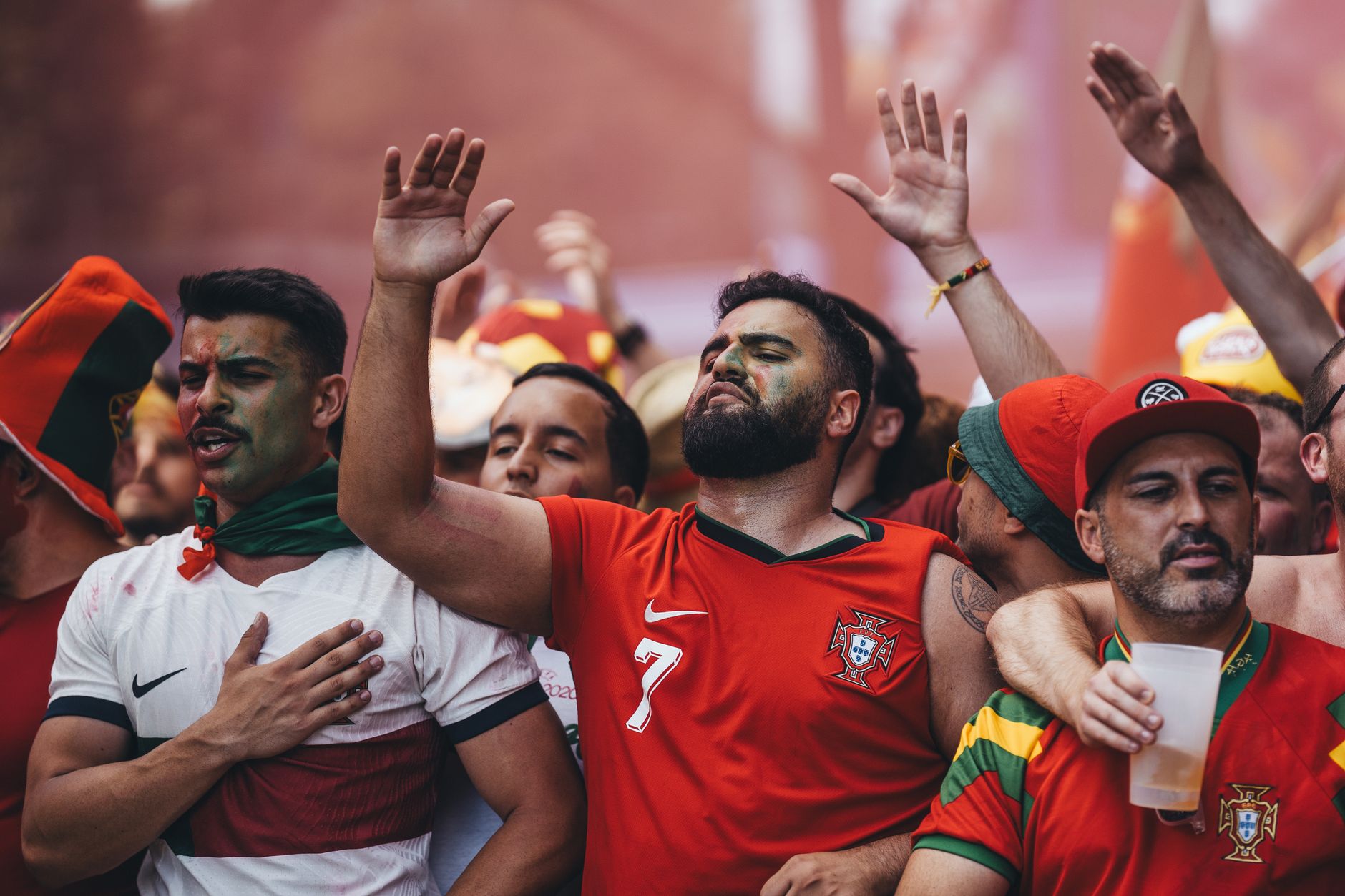
Photo by Omar Ramadan on Pexels
What should analysts watch now?
Analysts should watch confirmed schedules, squad announcements, venue assignments, travel paths, player workloads, and tactical changes before making 2026 World Cup forecasts. The most useful signals will become clearer during international windows, final qualification matches, and the weeks immediately before the opening game.
The first signal is squad selection. A coach choosing five central midfielders and only three wide attackers reveals a different plan from a coach selecting several versatile forwards. The second is defensive stability. Tournament winners rarely need to dominate every match, but they generally limit cheap transitions, protect leads, and defend set pieces without turning every corner into an emergency.
The third signal is the relationship between team performance and opponent level. A 4–0 win over a low-ranked opponent can inflate public confidence, while a narrow loss against Brazil, France, Argentina, or England may hide encouraging tactical details. Use opponent-adjusted numbers where possible. Goals, possession, and shots are not equally meaningful in every match.
The fourth signal is venue-specific performance. Teams accustomed to altitude may adapt more quickly in Mexico City. Teams with strong physical conditioning may benefit in Miami’s humidity. A closed-roof stadium can reduce weather variation, but it does not eliminate travel fatigue or unfamiliar surroundings. Treating all venues as neutral is a convenient shortcut, and convenient shortcuts are how prediction models get publicly embarrassed.
The fifth signal is managerial flexibility. A team that can switch between a 4-3-3, 3-4-2-1, and compact 4-4-2 without losing spacing is better equipped for a tournament with varied opponents. However, tactical flexibility only helps if the players understand their responsibilities. Changing shape every 20 minutes is not genius; sometimes it is just panic with better tailoring.
Use [Internal Link: World Cup tactical analysis] to compare pressing systems, build-up patterns, and defensive transitions.
Want the latest football 2026 World Cup coverage in one place?
Three predictions for next quarter
The three strongest near-term predictions are that squad-depth rankings will gain importance, travel-adjusted analysis will outperform headline form, and third-place qualification will create sharper group-stage volatility. These forecasts concern the next quarter of tournament preparation, not guaranteed match outcomes, because pretending otherwise is how analysts turn probability into fiction.
1. Squad depth will separate contenders
The teams with at least two reliable options in central midfield, full-back, and forward positions should gain a measurable advantage. The 2026 World Cup can require up to eight matches to win the title, compared with seven in the previous 32-team format. That additional knockout game increases the cost of injuries, suspensions, and fatigue, particularly for teams relying heavily on one creative player.
2. Travel-adjusted models will beat simple rankings
FIFA rankings remain useful as a starting point, but they do not fully capture venue conditions, flight distances, recovery periods, or time-zone disruption. A model that adjusts expected performance by location and rest should identify opportunities missed by casual previews. The edge will not be enormous; even a small improvement matters when thousands of predictions are built on the same public rankings.
3. Group-stage draws will become more valuable
With 32 teams advancing from 48, some teams may view a draw as a strategically sound result rather than a failure. Coaches could protect leads earlier, reduce pressing intensity, and prioritize qualification over entertainment. That does not mean every group becomes dull, but it does mean fans should stop assuming that attacking reputation automatically produces high-scoring football.
Track these indicators during the next quarter:
- The final qualification picture and confirmed group composition.
- International-window minutes for key starters.
- Injury updates from clubs and national teams.
- Venue assignments and expected travel routes.
- Set-piece trends among leading contenders.
- Changes in managerial systems and captaincy.
- Early market prices compared with objective team metrics.
Stadium View’s useful role is not to promise certainty. It is to organize evidence: match predictions, player statistics, tactical observations, and tournament news in a format fans can revisit daily. That is less glamorous than shouting “lock of the tournament,” but it is also less likely to age badly by breakfast.
For a final preparation checklist, visit our [Internal Link: 2026 World Cup predictions and fixtures hub].
The practical conclusion is straightforward: the football 2026 World Cup will reward teams and fans that manage detail better than the competition. Compare 48-team qualification paths, 104 matches, 16 venues, squad depth, travel, rest, and tactical fit before trusting a headline prediction. Use Stadium View for structured tournament coverage, and keep any gambling activity within a fixed entertainment budget rather than treating probability as a salary.
See the latest tournament analysis before the schedule becomes chaos.
Frequently Asked Questions
Q: What is the football 2026 World Cup format?
A: The 2026 FIFA World Cup features 48 teams divided into 12 groups of four, with 32 teams advancing to the knockout stage. The top two teams from each group qualify, along with the eight best third-place teams, creating a round of 32 before the round of 16. The tournament will include 104 matches across Canada, Mexico, and the United States from June 11 to July 19, 2026.
Q: How can I follow the 2026 World Cup effectively?
A: Follow confirmed fixtures, lineups, injuries, travel routes, and tactical changes rather than relying only on team rankings. Stadium View provides daily coverage of match predictions, player statistics, tournament developments, and team tactics. Build a simple tracking list for each team covering recent form, expected goals, rest days, venue conditions, and squad availability.
Q: What is the difference between the 2022 and 2026 World Cups?
A: The 2022 World Cup had 32 teams and 64 matches in Qatar, while the 2026 World Cup has 48 teams and 104 matches across three countries. The 2026 tournament also introduces a round of 32 because 32 teams advance from the group stage. This creates more matches, more travel, and a longer route to the final.
Q: Why are travel and venue conditions important in the 2026 World Cup?
A: Travel and venue conditions matter because teams will move between 16 host cities with different climates, altitudes, distances, and recovery environments. Mexico City presents altitude considerations, Miami may involve heat and humidity, and matches across the United States can require long flights. Analysts should include travel distance, rest days, and local conditions when comparing otherwise similar teams.
Q: How much does it cost to attend the 2026 World Cup?
A: The total cost depends on ticket category, host city, accommodation, transport, and the number of matches attended, so there is no single reliable tournament price. Fans should budget separately for official tickets, flights, hotels, local travel, meals, and insurance, then add an emergency reserve. Prices in Los Angeles, Atlanta, Mexico City, Toronto, and Vancouver may differ substantially during match periods.
Q: Is Stadium View a betting service or an official FIFA provider?
A: Stadium View is a football-focused content site, not FIFA and not an official FIFA provider. It covers match predictions, team tactics, player stats, and daily 2026 World Cup developments for fans. Any gambling decision should remain the reader’s responsibility, follow local laws, and use a fixed budget with no chasing of losses.
Q: What should I do if a World Cup prediction looks wrong?
A: Recheck the lineup, injury report, venue, rest period, tactical matchup, and market movement before deciding whether the prediction failed because of bad data or normal football variance. A single match cannot prove that an entire model is useless, just as one correct prediction does not make a model brilliant. Record the result, identify the assumption that failed, and update the process rather than doubling the stake.