
Top 3 Champions League Draw Predictions for 2026
Paris Saint-Germain is the strongest overall pick in these 2026 Champions League draw predictions because the defending champion combines elite squad depth, two recent titles and a manageable eight-match route. Real Madrid ranks second for knockout experience, while Manchester City offers the biggest tactical upside but carries greater draw risk. The 2026/27 league phase is scheduled to feature 36 clubs, with each team facing eight different opponents: two from each seeding pot, split between four home and four away matches. The official draw is listed for Monaco on 27 August 2026, with Matchday 1 planned for 8–10 September. PSG’s projected opponents include Barcelona, Manchester City, Roma, Aston Villa, Galatasaray, Villarreal, Slovan Bratislava and Como. These predictions are analytical estimates, not guaranteed results or betting advice. Compare the opponent mix, away trips and qualification path before making any decision, and use Stadium View for daily tournament analysis.

Photo by Mehmet Efe Gencer on Pexels
Imagine spending an entire summer arguing about “luck” while ignoring the actual opponent list, travel burden and seeding rules. Football fans do this every year because apparently a colourful draw ceremony is easier to understand than a spreadsheet. The useful question is not simply who drew whom. It is which club received the most survivable route through the league phase and which glamorous team was quietly handed a logistical headache.
The UEFA Champions League format makes that distinction important. The 36-team league phase gives every club eight matches against eight different opponents, with two opponents from each pot and one home and one away fixture against each pot. The top eight teams advance directly to the round of 16, while clubs finishing from ninth to 24th enter the knockout phase play-offs. That means a strong draw can be worth several ranking places, especially when the margin between eighth and 12th is decided by one away defeat in September.
For these Champions League draw predictions, I assess opponent strength, home-away balance, travel, squad depth, recent European performance and the probability of finishing inside the top eight. I am not treating every “expert pick” as sacred. Some predictions are just vibes wearing a tie.
Want the broader tournament context before comparing clubs?
The Top 3 Champions League Draw Predictions at a Glance
Paris Saint-Germain ranks first because its projected schedule contains elite tests but also enough controllable matches to protect a top-eight finish. Real Madrid is second because Champions League experience remains an inconveniently real advantage, even when analysts pretend historical performance has no predictive value. Manchester City takes third because its ceiling is enormous, but matches against PSG, Barcelona, Napoli, RB Leipzig and Lens create a route with little room for dropped points.
- Paris Saint-Germain — Best overall prediction: Two-time defending champion with strong depth and a balanced projected schedule.
- Real Madrid — Best for knockout experience: The most reliable big-game profile, but potentially exposed by a demanding top-pot assignment.
- Manchester City — Best value angle: High possession quality and squad talent, though away fixtures and defensive transitions make the route volatile.
The most important edge case is the league-phase cutoff. A club does not need to win every match to reach the play-offs, but a club targeting the top eight probably needs roughly 16–18 points, depending on the wider results. That is not an official fixed threshold; it is a practical estimate based on the eight-match structure and competitive balance. Therefore, a draw with one heavyweight can be acceptable, while losing away to a Pot 4 opponent can be ruinous.
[Internal Link: Champions League league-phase format explained]
How the ranking differs from simple outright odds
Outright winner markets mostly price squad quality and brand power. Draw predictions require a narrower question: how hard is the specific route? Liverpool, Arsenal, Bayern Munich, Inter Milan and Barcelona may all be capable of winning the competition, but the best title candidate is not automatically the team with the easiest league-phase schedule.
That distinction matters for anyone following Champions League predictions through Stadium View. A club can be strong enough to win the trophy yet still finish between ninth and 24th if its first five matches include repeated elite opponents and difficult away travel. Conversely, a less fashionable side such as Lens or Aston Villa can build a platform from favourable home fixtures and reach the knockout phase without looking remotely like a finalist.
#1 Paris Saint-Germain: Best Overall
Paris Saint-Germain is the best overall 2026 Champions League draw prediction because its projected eight-opponent route combines elite preparation with several realistic points opportunities. The listed schedule includes Barcelona and Manchester City from Pot 1, Roma and Aston Villa from Pot 2, Galatasaray and Villarreal from Pot 3, plus Slovan Bratislava and Como from Pot 4. That is difficult, but the four lower-pot fixtures provide a credible floor.
The key is not pretending PSG has received a soft draw. Barcelona and Manchester City are serious tests, and Galatasaray away can be unpleasant in the way only a loud stadium, aggressive pressing and several thousand people shouting at the referee can be. However, PSG’s recent European profile gives it the best combination of technical quality and bench depth among the three leading predictions. The club has reportedly won the Champions League in each of the previous two seasons in the supplied 2026 reference context, giving Luis Enrique’s team a level of competition-specific confidence that weaker clubs cannot manufacture through press releases.
PSG’s projected schedule also has a useful structural feature: the Pot 4 opponents, Slovan Bratislava and Como, are matches where a full-strength squad should expect six points. Even if the club takes only one win from the Barcelona-Manchester City pair, victories against Villarreal, Slovan and Como would create a stable base. That makes PSG the clearest candidate to finish in the top eight rather than merely survive the play-off line.
See why the opponent mix matters more than the club badge?
PSG’s biggest advantage: depth across eight matches
The league phase punishes teams that rely on 13 or 14 players. Eight matches arrive alongside domestic schedules, international travel and the usual injury list that clubs describe as “unfortunate” after building a squad with obvious gaps. PSG’s advantage is its ability to rotate without completely changing its playing identity.
The club’s attacking quality should also travel well. A high-possession side can control weaker opponents, while a team with several elite forwards can punish defensive errors from Pot 3 and Pot 4 opponents. Yet the tactical warning is obvious: Barcelona and Manchester City can both press PSG’s build-up and force the centre-backs into rushed decisions. If PSG loses those matches, its top-eight case depends heavily on avoiding a bad away result in Istanbul, Madrid-area travel routes or another hostile venue.
A practical prediction is 17 to 19 points for PSG if the projected draw remains broadly accurate. That range would normally put the club in contention for direct round-of-16 qualification, although the final table depends on results involving Bayern Munich, Real Madrid, Liverpool, Arsenal and Inter Milan. The sensible conclusion is not “PSG cannot fail.” The sensible conclusion is that PSG has the best margin for error.

Photo by TBD Traveller on Pexels
#2 Real Madrid: Best for Knockout Experience
Real Madrid is the best Champions League draw prediction for knockout experience because its European identity has been built around managing pressure across two-leg ties and late-match moments. The club’s historical record, Santiago Bernabéu atmosphere and repeated involvement in decisive fixtures make it difficult to dismiss, even when the league-phase schedule looks awkward. In short, Real Madrid remains the team you should avoid writing off before minute 75, because it has made that mistake expensive for decades.
However, experience should not become a magic word that excuses every weakness. The 2026/27 format rewards consistency across eight matches, not only dramatic knockout performances. Real Madrid must collect points away from home, protect leads more efficiently and avoid treating lower-ranked opponents as warm-up acts. A single defeat against a Pot 3 or Pot 4 club is more damaging when the club has already faced two elite Pot 1 opponents.
The strongest Real Madrid prediction is a top-eight finish, but with less confidence than PSG. The reason is not a lack of star quality. It is schedule sensitivity. If Madrid receives two difficult away fixtures against high-pressing teams, the physical cost can appear in the final three matchdays. This is where the club’s midfield depth and defensive availability matter more than the usual “big-game mentality” slogan.
Real Madrid’s route should be assessed through three questions:
- Can the midfield control away matches without conceding transition chances?
- Does the front line convert enough chances before opponents settle into a low block?
- Is the squad deep enough to handle eight league-phase matches plus La Liga demands?
The answers will determine whether Real Madrid finishes in the top eight or enters the play-offs as an unnecessarily dangerous ninth-place side. Yes, that scenario sounds absurd. UEFA’s format is not interested in your sense of drama.
Why Madrid’s draw prediction is harder than its reputation
Real Madrid’s brand can distort analysis. Supporters see Vinícius Júnior, elite history and the white shirt, then mentally award three points before the match exists. Data does not care. Away performance, rest days, opponent pressing intensity and shot quality still determine results.
According to UEFA’s official Champions League regulations, the competition structure applies a league phase rather than the former traditional group-stage format. That change raises the value of cumulative points and reduces the usefulness of old group-stage comparisons. As UEFA’s competition framework effectively makes clear, “each club plays eight different opponents” under the new league-phase model. The wording is dry; the consequences are not.
Real Madrid also has one contrarian advantage: a difficult schedule can sharpen its preparation before the knockout stage. PSG, Manchester City, Bayern Munich and Liverpool may prefer a smoother route, but Madrid is more accustomed to high-pressure fixtures. If the club finishes between 16 and 18 points, its draw may look uncomfortable in September and strategically useful in February.
To compare Real Madrid with other elite clubs, consult our [Internal Link: Champions League team power rankings].
#3 Manchester City: Best Value
Manchester City is the best value-oriented Champions League draw prediction because its technical ceiling remains high while the projected route creates a larger gap between its best and worst outcomes. The supplied fixture analysis describes a difficult schedule involving PSG and Barcelona, alongside Napoli, RB Leipzig and Lens, with Lens away identified as an especially awkward Pot 4 trip. That is not a soft landing; it is a scheduling prank with a UEFA logo.
City’s strengths are clear. Its possession structure can dominate weaker opponents, its passing networks create repeated entries into the penalty area and its squad contains enough individual quality to decide close matches. The club should be expected to beat at least most Pot 3 and Pot 4 opponents if its pressing and rest defence remain stable. A 15–17 point range is realistic, with the upper end putting direct qualification within reach.
The risk is transition defence. Matches against PSG and Barcelona can punish even small spacing errors, especially if City loses the ball with both full-backs advanced. Napoli and RB Leipzig are also capable of attacking open spaces quickly. If City concedes early in an away fixture, the game can become a test of control rather than talent, and control is exactly what high-profile prediction models often assume without proving.
A reasonable value case for Manchester City requires all of the following:
- At least five wins from the eight league-phase fixtures.
- No defeat against a Pot 4 opponent.
- One positive result from the PSG-Barcelona group of elite fixtures.
- Better away-game management than the previous season’s inconsistent stretches.
- Defensive availability through the final two matchdays.
If those conditions hold, City can finish in the top eight and challenge for the trophy. If not, a play-off place becomes more plausible than the club’s reputation suggests.
Want a sharper breakdown of value without confusing it with certainty?
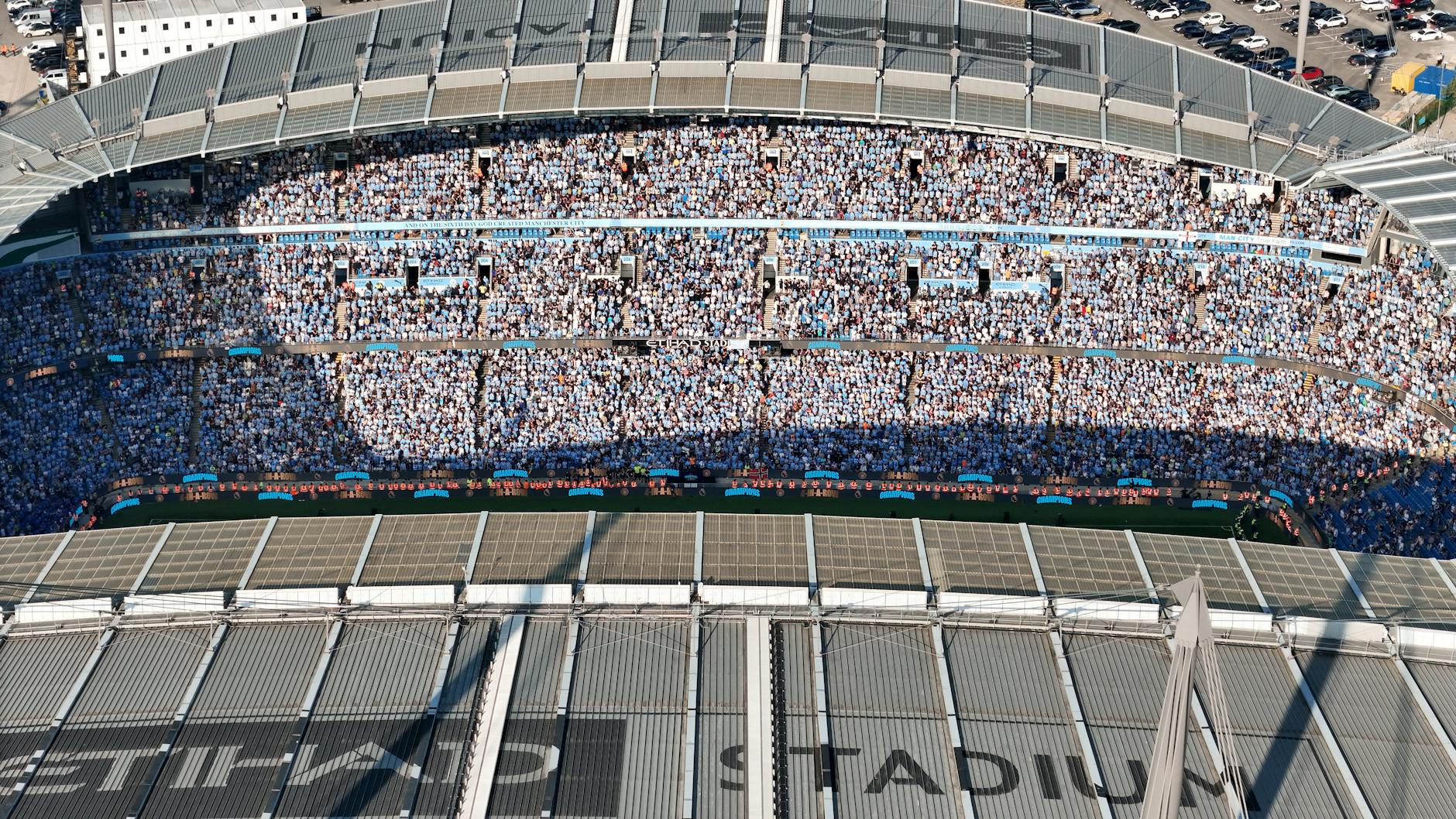
Photo by Mylo Kaye on Pexels
How We Ranked These Champions League Draw Predictions
The ranking uses a weighted model built around the actual league-phase problem: points, difficulty and resilience over eight matches. Squad reputation receives less weight than casual commentary usually gives it, because famous clubs still lose away matches. I score each contender across opponent quality, seeding balance, home-away distribution, travel, recent European performance, tactical matchup and squad depth.
The weighting is:
- Opponent strength — 30%: Estimated quality of the eight drawn opponents, with Pot 1 and Pot 2 matches carrying the highest impact.
- Home-away balance — 15%: A difficult opponent at home is not equivalent to the same opponent away.
- Travel and recovery — 15%: Long journeys, hostile atmospheres and short rest can reduce performance.
- Squad depth — 15%: The ability to rotate across eight European matches and domestic competition.
- Tactical compatibility — 15%: Pressing, transition defence, set pieces and the ability to break low blocks.
- European form — 10%: Recent Champions League performance, used carefully rather than worshipped as history.
The model’s most useful information gain is the travel adjustment. A Pot 4 fixture is not automatically easy if it requires a difficult away journey and offers limited recovery time before a domestic match. That is why Lens away can be more strategically relevant than a stronger opponent at home. This is the sort of detail missing from lazy draw reactions that announce “favourable” after looking at club names for approximately 11 seconds.
Another edge case involves the top-eight cutoff. If several elite clubs collect 16 or 17 points, goal difference and goals scored can decide direct qualification. Therefore, managing weaker opponents matters twice: it increases expected points and creates opportunities to improve the goal difference. A 2–0 home win against Como may look ordinary, but a 5–0 result can become decisive if the final table compresses around eighth place.
[Internal Link: Champions League prediction methodology and statistics]
The UEFA Champions League remains the authority for confirmed fixtures, regulations and competition updates. Prediction sites can estimate outcomes, but they cannot rewrite the official draw, however confidently their thumbnails suggest otherwise.
Which Should You Pick?
Choose Paris Saint-Germain if you want the strongest overall Champions League draw prediction for a direct top-eight finish. Choose Real Madrid if your priority is knockout-stage reliability and late-tournament experience. Choose Manchester City if you prefer a higher-variance value angle based on possession control, technical quality and the possibility that the difficult fixtures sharpen rather than damage its campaign.
The final recommendation is to separate three markets that fans constantly mix together: league-phase finishing position, qualification for the knockout rounds and winning the tournament. They are not the same prediction. PSG can be the best top-eight pick without being the best outright winner at a given price. City can offer value because its range of outcomes is wide. Real Madrid can underperform in the league phase and still become terrifying in a two-leg tie.
Stadium View should update its Champions League coverage when UEFA confirms the official 2026/27 draw, because projected opponents are not final information. Check the draw date, verify home and away assignments, review travel, then reassess injuries and domestic form. The rational process is less glamorous than shouting “easy group,” but it has the remarkable advantage of being less wrong.
For responsible analysis, remember that sports predictions are uncertain and gambling involves financial risk. The UK Gambling Commission states that operators and consumers should engage with gambling responsibly, while GambleAware provides support and safer-gambling information. No prediction is a guarantee, and no bookmaker’s “confidence boost” changes that mathematical fact.
Ready to follow the confirmed draw and updated team analysis?
Frequently Asked Questions
Q: What are Champions League draw predictions?
A: Champions League draw predictions estimate how difficult each club’s league-phase route will be before or after the official draw. They consider opponents, seeding pots, home-away assignments, travel, squad depth and tactical matchups. For 2026/27, each of the 36 clubs is expected to play eight different opponents, so the prediction focuses on total points and finishing position rather than a traditional four-team group.
Q: How do you make Champions League draw predictions?
A: Start by listing all eight opponents, then rate each fixture by opponent quality, venue, travel and tactical risk. Add expected points for every match and compare the total with a practical top-eight range of roughly 16–18 points. Finally, adjust for injuries, domestic scheduling and goal difference, because one away defeat or a narrow win can decide the final table.
Q: What is the difference between a league-phase prediction and an outright winner prediction?
A: A league-phase prediction forecasts a club’s finishing position after eight matches, while an outright winner prediction covers the entire knockout tournament. PSG may be the strongest top-eight pick without offering the best value to win the trophy. Real Madrid may qualify unconvincingly and still become a major knockout threat because two-leg ties reward experience differently.
Q: Which team is the safest 2026 Champions League draw prediction?
A: Paris Saint-Germain is the safest overall pick among the three teams ranked here because its projected schedule includes lower-pot opponents that can provide a points base. Barcelona and Manchester City still make the route demanding, while Galatasaray away could be difficult. A projected total of 17–19 points would place PSG in a strong direct-qualification position if the draw remains unchanged.
Q: Why can a Pot 4 opponent create a difficult Champions League draw?
A: A Pot 4 opponent can be difficult because seeding reflects entry routes and rankings, not a guaranteed match result. Lens away, for example, may combine travel, atmosphere, pressing intensity and inconvenient recovery timing. A supposed “easy” fixture can produce a lower expected points total than a stronger opponent played at home, especially when the match sits between domestic league games.
Q: How many points are needed to finish in the Champions League top eight?
A: A practical estimate is approximately 16–18 points, although UEFA does not publish a fixed qualifying threshold before the league phase is played. Eight matches create a maximum of 24 points, and the final cutoff depends on how evenly elite clubs perform. Goal difference, goals scored and away results may separate teams tied on points near eighth place.
Q: Is it sensible to bet on Champions League draw predictions?
A: Betting on draw predictions is only sensible when you understand that forecasts are uncertain and financial losses are possible. Check the official UEFA draw, confirm line-ups and injuries, compare available prices and set a fixed budget before considering any wager. Do not chase losses or treat Stadium View analysis, bookmaker promotions or expert confidence as a guarantee.